
Kosovo’s Digital Economy Continues Expanding Through Startups and Remote Innovation

Kosovo’s digital economy continues showing signs of steady growth as technology startups, freelance professionals and online businesses expand their presence across the country. Young entrepreneurs are increasingly building companies focused on software development, digital marketing, e-commerce and remote services connected to international markets.
In recent years, the technology sector has become one of the most active areas for innovation and youth employment. Startup communities in Pristina and other urban centers continue organizing workshops, networking events and collaborative projects designed to encourage entrepreneurship and digital education.
Many young professionals are now choosing careers connected to remote work and international clients. Developers, designers, content creators and marketing specialists frequently work with companies based across Europe and North America while operating from Kosovo.
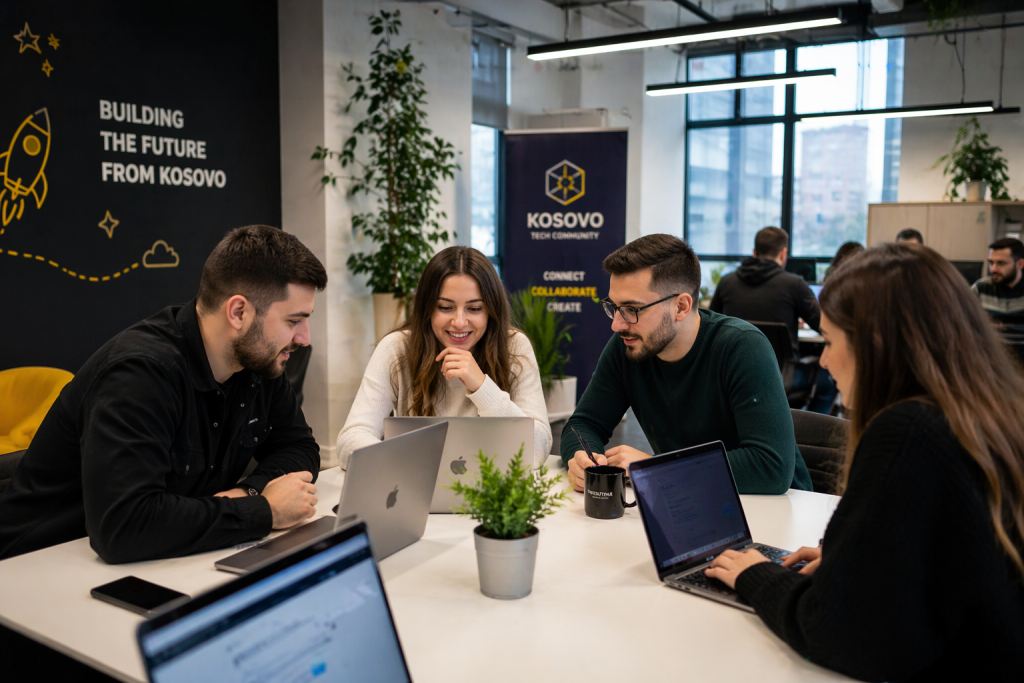
Coworking spaces and modern offices have also become more common. Flexible work environments are helping startups reduce operational costs while creating spaces where teams can collaborate on projects, product development and online services.
Industry observers say digital businesses are attractive because they require lower initial infrastructure investment compared to traditional industries. Access to online tools, cloud services and international communication platforms allows smaller companies to compete more effectively in global markets.
Educational institutions and private academies have responded to growing demand by offering additional courses focused on programming, artificial intelligence, digital business and cybersecurity. English-language skills continue providing a significant advantage for professionals seeking remote opportunities.
The expansion of e-commerce has also encouraged more businesses to improve online visibility and digital payment systems. Retailers, restaurants and service providers increasingly rely on websites and social media platforms to attract customers and communicate with audiences.
Despite positive momentum, challenges remain for the sector. Startup founders often mention financing limitations, access to larger investment networks and administrative barriers as obstacles that can slow long-term growth.
Even so, optimism surrounding Kosovo’s digital sector remains relatively strong. Many professionals believe the country’s young population and growing technological skills could support continued development over the next several years.
Economic analysts also note that remote work trends may continue benefiting smaller markets like Kosovo because companies worldwide are becoming more open to international hiring and distributed teams.
As digital transformation continues across Europe and the Balkans, Kosovo’s technology ecosystem is expected to remain an important area for entrepreneurship, innovation and employment opportunities.